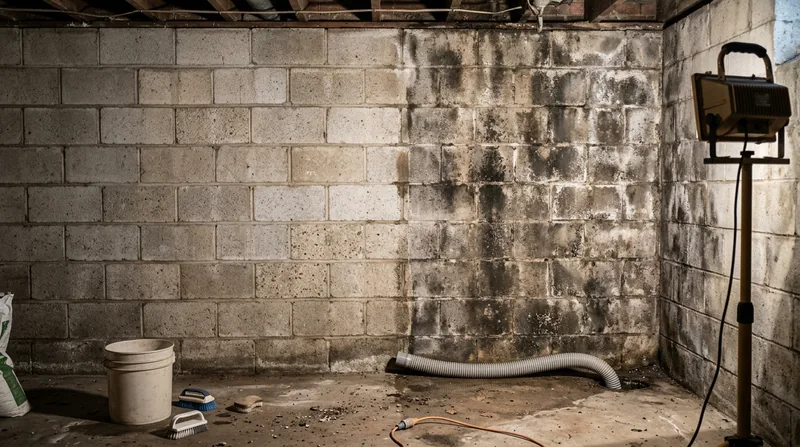




Basement Mold Remediation in Saint Cloud: Fix the Moisture, Then the Mold
Saint Cloud sits on sandy glacial outwash and loam over till, and the river terraces along the Mississippi hold a high water table that pushes spring melt straight through the sand and into old cellar walls. In the 1880s-1920s brick and frame houses downtown and along the bluffs in Riverside, granite and fieldstone foundations flood at the low corners, and the damp stays long after the water recedes. That is where Basement Mold Remediation in Saint Cloud starts: not with a spray bottle, but with finding the moisture source that lets mold grow back every season. We handle containment, treatment of affected surfaces, and the drainage or dehumidification fix that keeps the problem solved. If you are seeing efflorescence or smelling that musty basement smell, start with a free basement inspection before anything gets torn out.
Why Mold Keeps Coming Back in Saint Cloud Basements
Mold needs moisture, organic material, and still air, and Saint Cloud basements supply all three. The 1940s-1960s brick and block ranches on the Westside, Eastside, and around Lake George have full block basements, many partly finished, and block is porous: water wicks through the mortar joints and shows up as white efflorescence and fuzzy growth on the bottom of the wall. The 1990s-2020s poured basements in Sartell, Sauk Rapids, Waite Park, and Rockville are tighter, but a failed sump pump or a discharge line that dumps water back against the footing turns a dry basement wet in a single storm.
- Hydrostatic pressure pushes water through block and stone walls, and mold follows the damp line.
- Spring snowmelt in March and April raises the water table and soaks the low corners of old cellars.
- Freeze-thaw cycles open cracks in block and stone, giving water a direct path inside.
- A dead sump pump or a clogged drain tile leaves standing water that feeds mold for weeks.
- Warm interior air hitting a cold foundation wall condenses and keeps framing and drywall damp.
Treating the mold without fixing the water source is a temporary fix, and it will fail by the next melt.
Key info: In Riverside and the older parts of downtown, we routinely find mold growth on the lower two feet of a fieldstone wall and on the wood stair stringers, all fed by a footing drain that has been silted shut since the 1970s. The mold is the symptom; the drain is the problem.
For the official word on mold and moisture in Minnesota homes, the Minnesota Department of Health mold guidance is a solid reference for homeowners.
How We Run a Basement Mold Remediation Job in Saint Cloud
Every job starts with a moisture diagnosis, because the musty smell tells you mold is present but not where the water is entering. We check the walls for efflorescence and staining, test the sump basin and pump, look at the grading and downspout extensions outside, and map where the water table sits against the foundation. Only then do we set the remediation scope and the drainage fix that goes with it.
- We isolate the work area with plastic containment and negative air pressure so spores do not spread to the finished side of the basement.
- We remove porous materials that cannot be cleaned, such as wet drywall, insulation, and cardboard stored against the wall.
- We treat affected block, stone, and framing with a remediation solution and HEPA-vacuum the surfaces and the air.
- We correct the moisture source, whether that means sealing cracks, restoring the interior perimeter drain, or replacing a failed sump pump.
- We verify dryness with a moisture meter before we close anything up, and we leave the homeowner a clear record of what was done.
The moisture fix is what makes the remediation last, and it is the part most one-day mold companies skip.
Key info: A Sauk Rapids homeowner had mold regrow on a finished wall three summers in a row. The cause was a sump discharge line that ran six inches from the foundation and dumped right back into the glacial soil. We extended the line, reset the grading, and the wall has stayed dry since. See how we handle the drainage side with interior drain tile systems.
Remediation Approaches We Use in Saint Cloud Basements
The right approach depends on how far the mold has spread and what is feeding it. Here is how we match the method to the basement.
| Approach | Description | Best for |
|---|---|---|
| Surface treatment and HEPA cleaning | Containment, treatment of block and framing, and HEPA vacuuming of surfaces and air. | Light growth on block walls and joists after a one-time leak. |
| Removal of porous materials | Cut out and bag wet drywall, insulation, and stored paper goods under containment. | Finished basements where water soaked the lower wall assemblies. |
| Crack injection plus wall sealing | Epoxy or polyurethane injection of cracks, then sealing the wall face to stop wicking. | Poured walls with visible cracks and damp patches. |
| Drainage and dehumidification | Interior perimeter drain, sump pump service, and controlled dehumidification. | Block and stone cellars with recurring hydrostatic pressure. |
| Vapor barrier and wall sealing | Vapor barrier and sealed wall surfaces to stop moisture migration into the room. | Basements that stay humid even when no water is visible. |
Basement Mold Remediation Cost in Saint Cloud: What to Expect
Most basement mold jobs in Saint Cloud start from $1,500, and that figure covers a defined area of affected wall, containment, treatment, and HEPA cleaning. The number moves up with square footage affected, how much finished material has to come out, and whether the moisture fix is a simple crack injection or a full interior perimeter drain. A small patch on a block wall in a Westside ranch is a different job than a finished Sartell basement soaked by a failed sump pump.
We give you the remediation scope and the moisture fix as separate line items so you can see what each one costs. Getting two or three estimates is smart, and ask each contractor what they will do about the water source, not just the visible mold. Our full pricing overview breaks down the ranges.
Basement Mold Remediation Near Me: How to Vet a Contractor Near Saint Cloud
Mold work is unregulated in many states, so the vetting is on you. Start with licensed and insured status, and ask for the certificate rather than a verbal yes. Get at least two or three written estimates that separate remediation from the moisture fix, and ask for local references in Saint Cloud, Sartell, or St. Joseph you can actually call.
Ask who pulls the permit if the job involves structural repair, egress work, or changes to the sump discharge, and confirm the contractor knows the local building department rules. If you are in an HOA, check the rules on exterior work and dumpster placement before the crew arrives. Reach out through our contact page and we will walk you through the scope.
For a Saint Cloud home with a fieldstone cellar, ask specifically how the contractor will handle the stone and mortar, because aggressive blasting damages old foundations.
Basement Mold Remediation in Saint Cloud: Pricing Guide
| Service | Price | Details |
|---|---|---|
| Containment and surface treatment | Starting at $1,500 | Covers defined wall area, containment, treatment, and HEPA cleaning; square footage and finish level move the price. |
| Removal of affected materials | Starting at $2,200 | Cut-out and disposal of wet drywall and insulation under containment; the amount of finished material drives cost. |
| Remediation plus moisture fix | On estimate | Combines remediation with crack injection, drain tile, or sump work; needs an on-site look before pricing. |
| Travel | Included | In Saint Cloud and surrounding areas, no separate call-out or mileage fee. |
| Estimate | Free | Response within 24h at (320) 345-3594, no obligation to book. |
Indicative pricing, the exact cost depends on square footage, finish, and site access. Free personalized estimate within 24h at (320) 345-3594.


